
LONG VOWEL TEAM SERIES · BOOK 4
Fright At Night
Help your child learn 27 words containing igh for the long /ī/ sound through one memorable story - with printable flashcards, games and step-by-step guidance included.
27 focus words containing igh
Focused practice with igh for the long /ī/ sound
Story, flashcards and printable games
Step-by-step guidance for adults


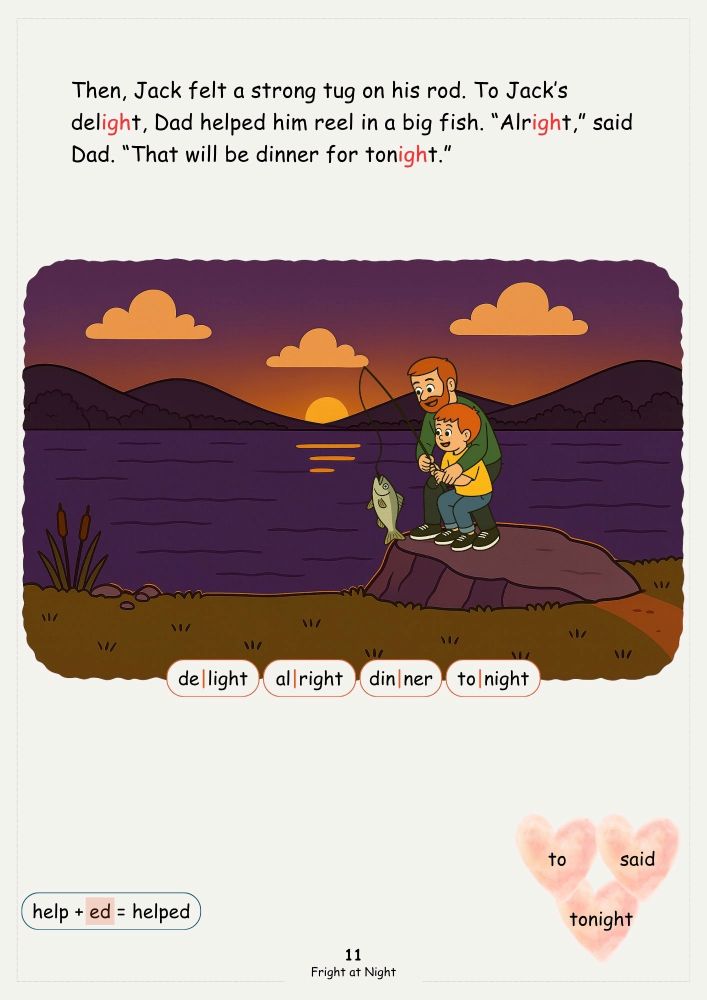


The Story
About Fright At Night
Jack is excited about a camping trip with his dad, but strange noises, flashes of lightning and a sudden fright disturb their peaceful night at the cabin. Together, they face each surprise and bring the weekend to a comforting end.
The story gives children repeated exposure to 27 focus words using igh for the long /ī/ sound, helping them connect the spelling pattern with characters, events and images they can remember.
Spelling focus
igh
Target sound
long /ī/
Focus words
27
Example Focus Words
igh: fight, flight, night, sight, tonight
The Challenge
Does your child recognise the long /ī/ sound - but still guess which spelling pattern to use?

high
or
hi
or
hai
or
hye
?

light
or
lite
or
lyte
or
lait
?

right
or
rite
or
rait
or
ryte
?
The long /ī/ sound can be represented by several spelling patterns. A child may hear the sound correctly but still be unsure whether a word uses i, i-e, ie, igh, y or another spelling.
Fright At Night gives children repeated, meaningful exposure to words in which igh represents the long /ī/ sound.
The Solution
How This Book Solves It
Instead of asking children to memorise isolated word lists, Fright At Night places 27 words containing igh for the long /ī/ sound inside one engaging and memorable story.
One Clear Spelling Focus
The story focuses on words in which igh represents the long /ī/ sound. This gives children repeated exposure to the same sound-spelling connection without overwhelming them with competing patterns.
Words Connected to a Story
Each focus word appears in a meaningful context. Children can connect the word to a character, event or image from the story, making its spelling easier to recall.
Practice That Reinforces Learning
Included flashcards, games and activities help children revisit the focus words through reading, spelling and play - building familiarity, confidence and fluency over time.
Inside the Book
What's Included
An Engaging Story
A carefully written and illustrated story featuring 27 focus words in which igh represents the long /ī/ sound.
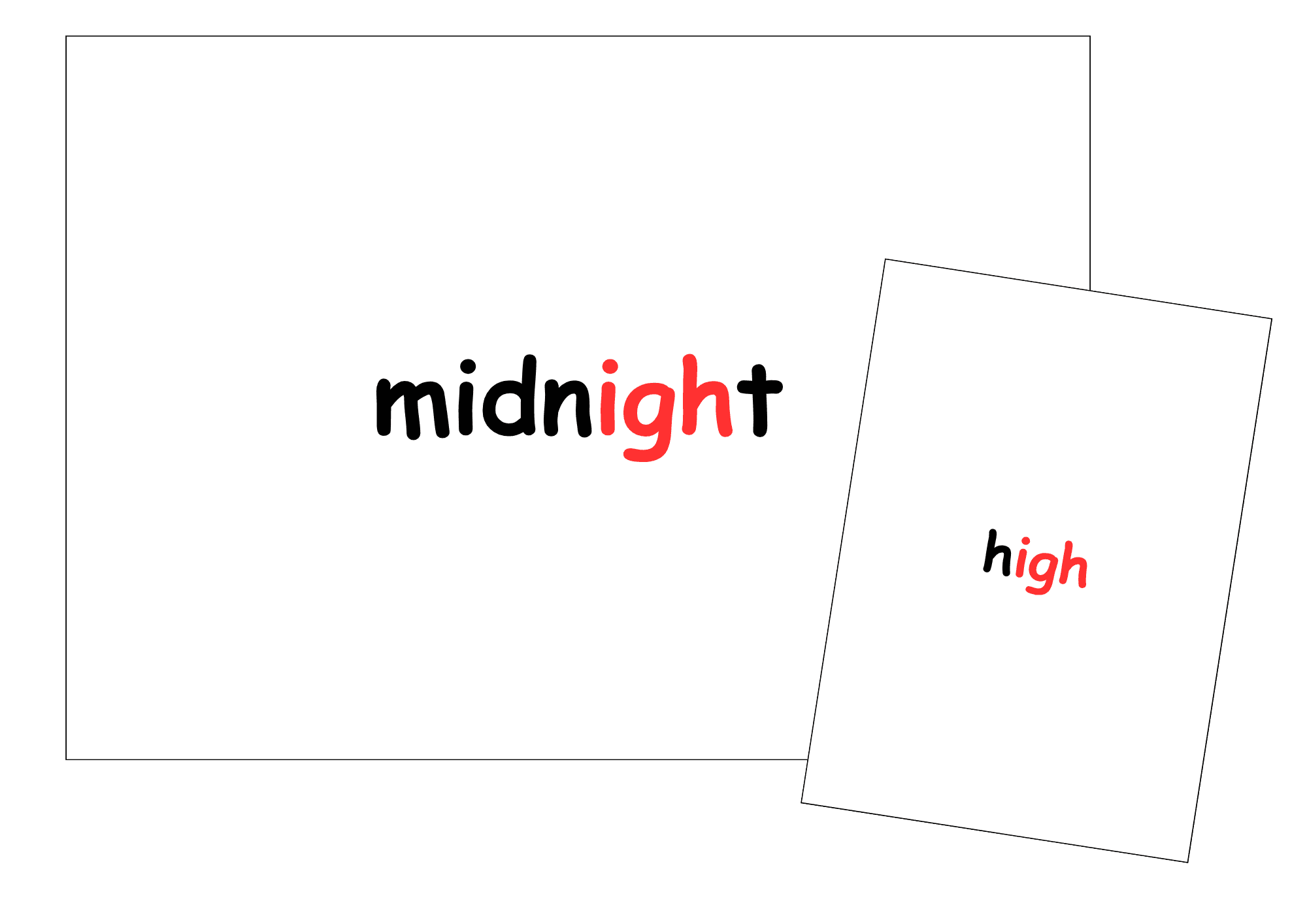
Printable Flashcards
Story-linked flashcards featuring igh words from Fright At Night, helping children connect each word with a character, event or image.
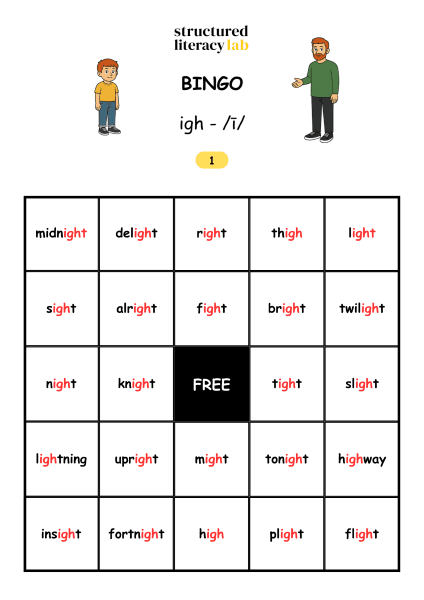
Games and Activities
Printable games using words from the story to provide repeated reading and spelling practice through play.
Complete Focus Word List
A full list of the words featured in the story, making it easy to review and practise the target spelling pattern.
Step-by-Step Instructions
Clear guidance showing parents, teachers and tutors how to use the story and companion resources effectively.


The Audience
Who Is It For?
Fright At Night is designed for school-aged children who need additional support recognising, reading and spelling words containing igh for the long /ī/ sound.
It is especially helpful for:
Children who recognise the long /ī/ sound but are unsure which spelling pattern to use
Learners with dyslexia or other literacy difficulties
Children who find traditional isolated spelling lists difficult to remember
Learners who respond well to stories, illustrations and meaningful context
The story can be read independently, read together with an adult or read aloud, depending on the child’s current reading ability.
Feedback About Story Spellers
What Parents and Educators Say
I love the way the words are broken into syllables and how colour is used to highlight phonics patterns. The printable games and clear guidance will be very helpful for busy parents and educators.
I absolutely loved these books. It's such an interesting idea. Too often, instruction gets overlooked in schools. I am excited to see how the whole series pans out. This is definitely a unique way to teach kids.
I read the book to my son, and we played the games included with it. He enjoyed the story and completed the activities without complaining.
How to Use the Book
Instructions
Read the Story
Read Fright At Night to or with the child. Discuss the characters and important events so the story becomes familiar and memorable.
Recall the Words with Flashcards
Use the included flashcards to connect each igh word with a moment from the story.
Example
Educator: (shows card ‘fight’)
Prompt: “Tell me a short sentence from the story.”
Student: “The roos were fighting with each other.”

Practise Through Play
Use the included games and activities to revisit the igh focus words through reading, spelling and play.
Practise Encoding and Decoding the Focus Words
If the student has difficulty spelling a word, remind them how the word appeared in the story to support their memory and reinforce learning.
Example
Educator: "Please spell tight, as in 'My shoes are tight'."
Student: “Is it tight, tait or tite?”
Educator: “Remember, Jack held his teddy tight?”
Student: “It's from the Fright At Night book, so I'll use 'igh' to spell the /ī/ sound.” (Writes: tight)

Please refer to the book for detailed step-by-step instructions.
The Results
What Children and Educators Gain
With repeated reading and practice, children build a stronger connection between the long /ī/ sound, the igh spelling pattern and the meaning of each focus word.
What Children Gain
Greater familiarity with 27 words spelled with igh
Improved recognition of igh representing the long /ī/ sound
Stronger connections between sounds, spellings and meanings
Increased reading and spelling fluency through repeated practice
A memorable story context for recalling igh words
What Educators and Parents Gain
A structured way to reinforce igh for the long /ī/ sound
Ready-to-use flashcards, games and activities
Less time spent creating supplementary materials
A resource suitable for individual, small-group or classroom use
The goal is not simply to help children remember a list for the week - it is to help these spellings become familiar, meaningful and easier to retrieve when reading and writing.
" width="37.932292px"><path d="M 0 0 L 37.932 0 L 37.932 36.974 L 0 36.974 Z M 0 0" fill="transparent" height="36.97395866666667px" id="h4oBqEWXM" width="37.932292px"/><path d="M 37.901 18.557 C 37.901 8.307 29.417 0 18.953 0 C 8.484 0 0 8.307 0 18.557 C 0 27.255 6.12 34.557 14.375 36.562 L 14.375 24.224 L 10.464 24.224 L 10.464 18.557 L 14.375 18.557 L 14.375 16.109 C 14.375 9.797 17.292 6.87 23.625 6.87 C 24.823 6.87 26.896 7.099 27.745 7.328 L 27.745 12.469 C 27.297 12.422 26.521 12.401 25.557 12.401 C 22.448 12.401 21.245 13.552 21.245 16.547 L 21.245 18.552 L 27.438 18.552 L 26.375 24.224 L 21.245 24.224 L 21.245 36.974 C 30.63 35.865 37.901 28.042 37.901 18.552 Z M 37.901 18.557" fill="rgb(255, 255, 255)" height="36.97395866666667px" id="sUife7vMi" transform="translate(0.01 0)" width="37.90104266666666px"/></g></svg>)
" width="37.354166666666664px"><path d="M 0 0 L 36.974 0 L 36.974 36.974 L 0 36.974 Z M 0 0" fill="transparent" height="36.97395866666667px" id="YA0hUzyaA" width="36.97395866666666px"/><path d="M 0 18.677 C 0 8.359 8.365 0 18.677 0 C 28.995 0 37.354 8.359 37.354 18.677 C 37.354 28.99 28.995 37.349 18.677 37.349 C 8.365 37.349 0 28.99 0 18.677 Z M 11.432 11.885 C 9.932 11.885 8.719 13.099 8.719 14.599 L 8.719 22.75 C 8.719 24.25 9.932 25.469 11.432 25.469 L 25.922 25.469 C 27.422 25.469 28.641 24.25 28.641 22.75 L 28.641 14.599 C 28.641 13.099 27.422 11.885 25.922 11.885 Z M 21.672 17.922 C 21.922 18.089 22.073 18.37 22.073 18.677 C 22.073 18.979 21.922 19.26 21.672 19.427 L 17.594 22.146 C 17.318 22.328 16.958 22.349 16.667 22.188 C 16.37 22.031 16.188 21.724 16.188 21.391 L 16.188 15.958 C 16.188 15.625 16.37 15.318 16.667 15.161 C 16.958 15 17.318 15.021 17.594 15.203 Z" fill="rgb(255, 255, 255)" height="37.34895866666667px" id="EDyta6z1P" width="37.354166666666664px"/></g></svg>)